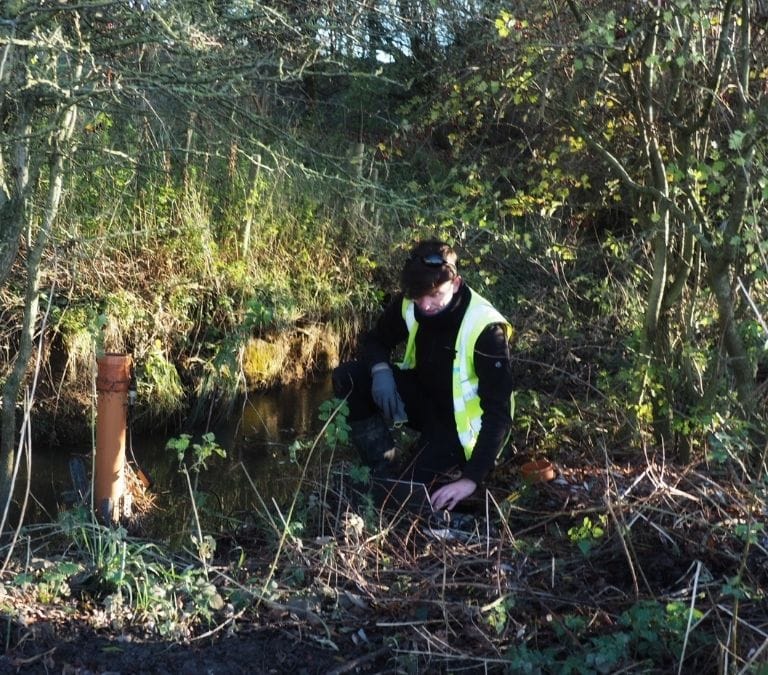
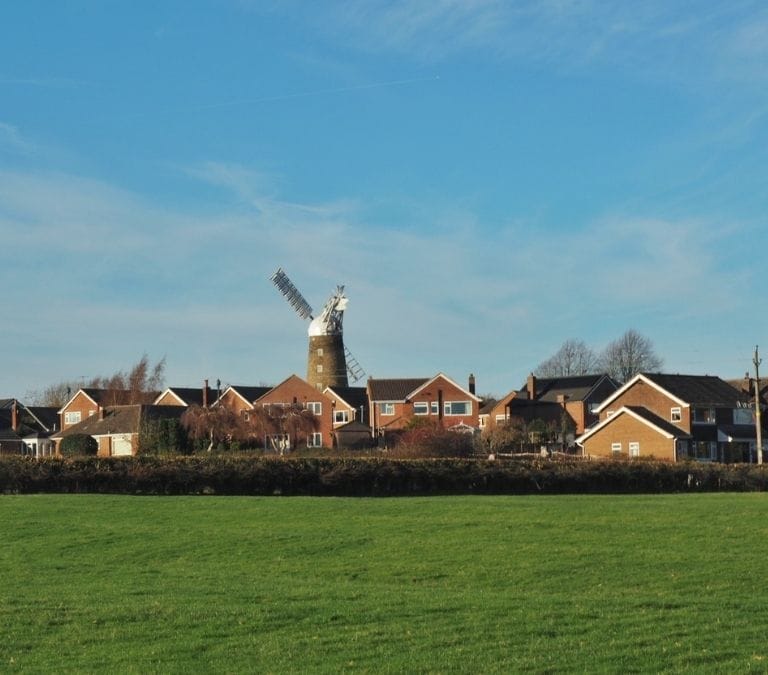
Natural flood risk measures in and around Whissendine have been completed to reduce flood risk and provide residents with more time to prepare. As the scheme approached completion during Storm Claudia, it showed early signs of success.
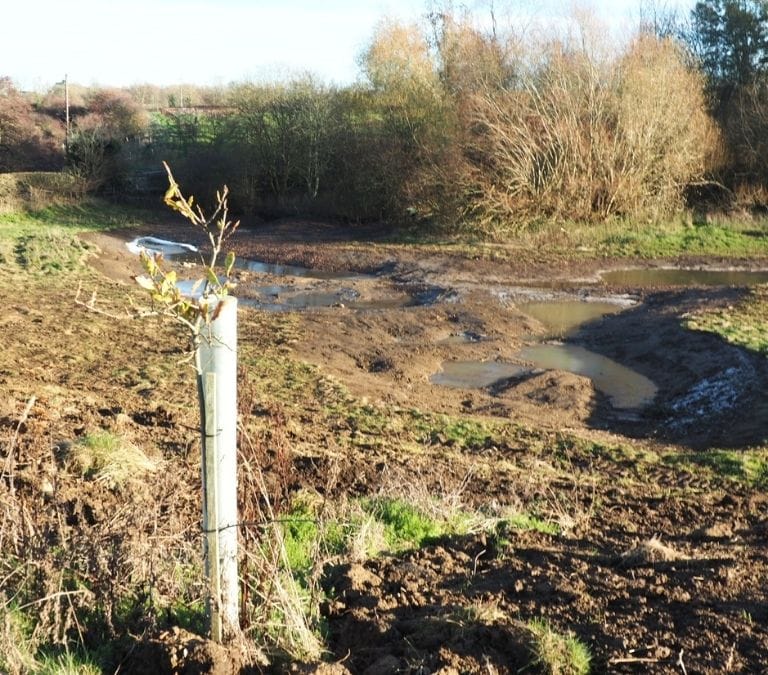
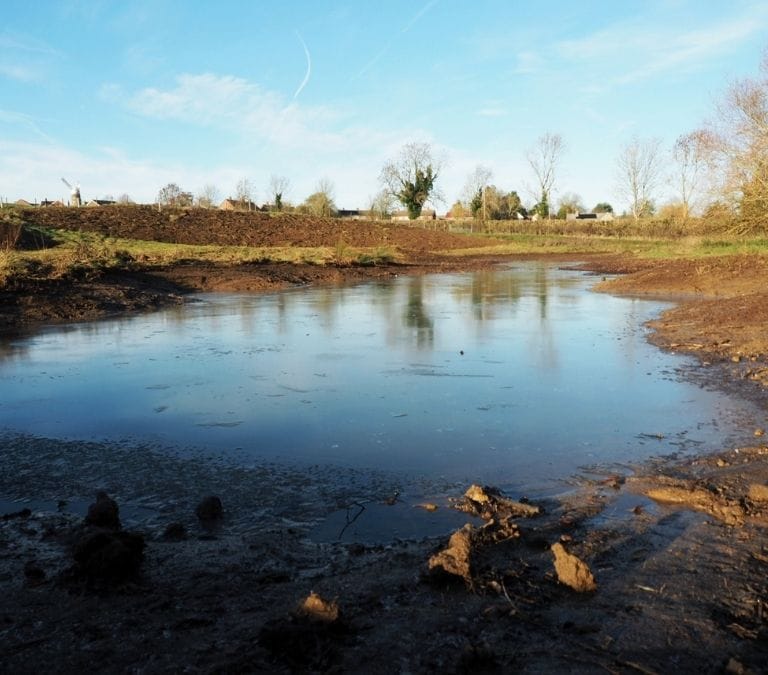
Recent works on the Whissendine brook include regraded riverbanks to reduce erosion contributing to blocked culverts, an enlarged wetland storage area and a series of ponds. Previously, leaky barriers and trees were hinged across the upper watercourse to slow and temporarily store high flows. The now-complete wetland area creates 1,200m3 of additional floodplain storage and creates habitat that can support a greater variety of species.
Ruth Needham, Head of Landscapes and Partnerships at Trent Rivers Trust says:
“Working with nature against flood risk is an integral part of flood mitigation. As flooding becomes an incredibly pressing issue here in the Midlands, we can no longer afford to overlook solutions that work with nature against flood risk. The new wetland area will slow the flow and provide much-needed additional storage to reduce flood impact. While natural flood management is not a silver bullet, and there is a long history of flooding in Whissendine village, it can cost-effectively operate in areas where hard-engineered structures are less suitable. It can also intervene and alleviate pressure on traditional flood interventions. We are now looking forward to exploring what more we can do to support residents.”
The Parish Council noted early signs of success with flood risk improving for the village, and now hopes that more schemes further upstream could further support the village.
Helen Pickett, local landowner, says:
It’s been brilliant to see these new interventions just upstream of the village, knowing from friends that flooding is a chronic issue in the village. Beyond flood mitigation, I’m really looking forward to the area becoming a haven for nature. Around the ponds, we’ve dedicated a third of an acre to wildflowers and are hoping they can spread from there. From wildflowers, grass snakes, mice and microbes, I’m hoping this much-needed space will encourage the recovery of a range of species in the area.
The work in Whissendine is part of a growing recognition of natural flood management’s role in flood risk reduction. The Defra-approved method is designed to hold and temporarily store water by introducing or improving natural features, such as wetlands, ponds or natural barriers, upstream of communities at risk.
In the Soar catchment, which covers large parts of Leicestershire, flood modelling data commissioned by Trent Rivers Trust suggests that a scaled-up approach could unlock savings of up to £20 million in economic damages avoided. This assumes a 50% take-up of NFM in targeted areas.
The work in Whissendine was made possible thanks to funding from the EA and the 2021-2024 partnership between WWF UK and insurer Aviva, which is part of a wider ambition to increase flood resilience across the UK by working with nature. This partnership enabled Trent Rivers Trust to explore the challenges around the delivery of Nature-based Solutions to reduce flood risk, including capital work, through technical support and funding.
ENDS
For more information, please get in touch:
Vanessa Sumpmann, Senior Communications Officer
vanessa @ trentriverstrust.org
About the partnership
From 2021-2024, WWF and Aviva worked together to restore UK landscapes, build healthier, more resilient communities and help transform one of the biggest indirect drivers of climate change: the UK finance sector.
Over three years, they’ve worked with nature to tackle the climate and biodiversity crisis, helped to change political policy and public opinion, and connected tens of thousands of people to the natural world across the country through community volunteering, local engagement and events, and educational opportunities.