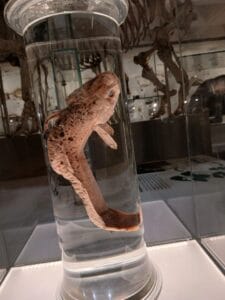
To prevent a fate confined to museum shelves, the preserved specimen recently had visitors. A group of conservationists, including Trent Rivers Trust’s own, Dr Scott McKenzie, travelled to Cambridge to discuss a reintroduction of the species. Working alongside partners including the Institute of Fisheries Management, the Norfolk Rivers Trust and the University College London, the group aims to establish a roadmap to return the species to its UK range, including its former stronghold, the Trent.
A vision for a more resilient River Trent
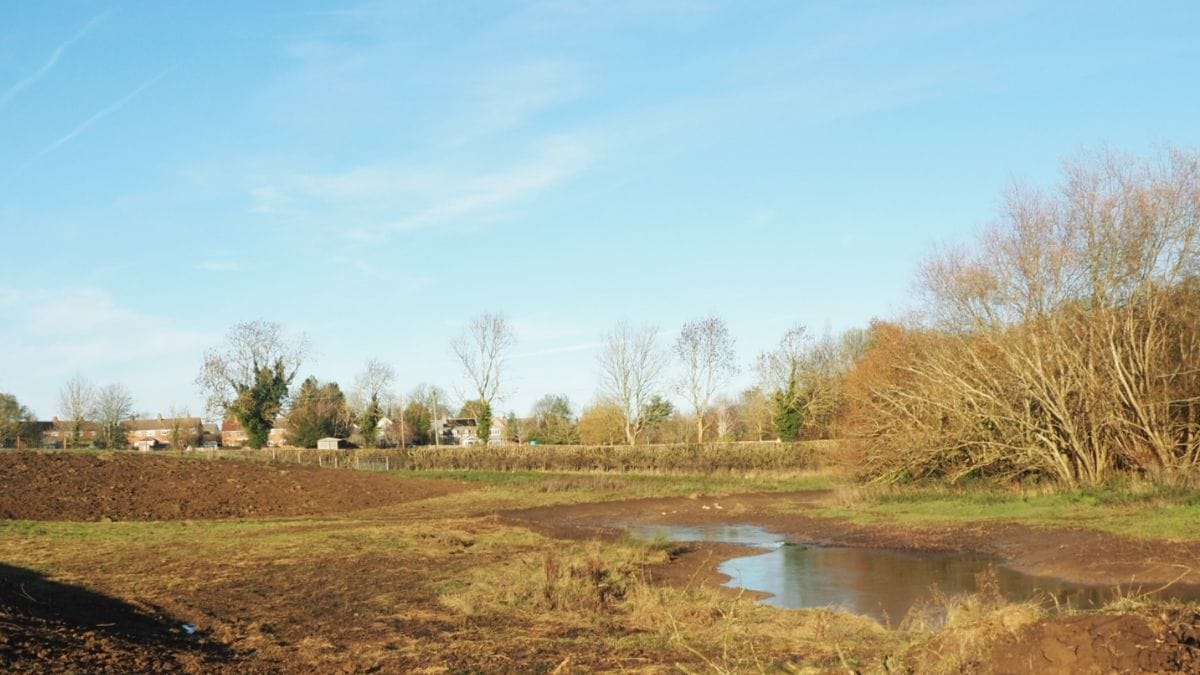
Its return goes further than simply releasing an extirpated fish in the UK; it is about setting a vision for river recovery and reintroducing a population, that once served as the Trent’s ecological alarm bells. River recovery with burbot in mind requires a natural, free-flowing river, supported by well-connected floodplains. Bringing back these habitats can reduce flood risk, trap pollutants and support a waterscape full of life. As climate change continues to shape the state of our rivers, restoring them to better cope with extremes almost entirely aligns with the requirements for burbot.
Losing the burbot
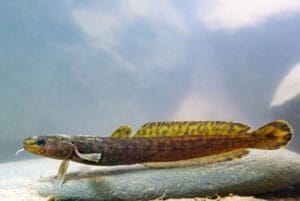
The loss of the burbot was an early warning sign, indicating a broader decline in river health. In the Trent catchment, its disappearance was gradual and then sudden. As it is the case for many rivers, issues compound. Declines in water quality and habitat loss burned the candle on both ends. Without natural processes to break down pollution, or habitats that could offset increasing water temperatures, the impact of declining water quality affected the Trent and its tributaries more harshly. A particular problem for the cold water-dependent species had been the gradual erosion of water quality, which has largely been attributed to water temperature from industry discharge.
A second issue comes with the loss of connectivity and habitat. The burbot’s life cycle depends on habitat connectivity and complexity. Key habitats, particularly floodplains, have been replaced by often intense forms of agriculture, as well as infrastructure and industry. In the river, unmitigated weirs, and other barriers have impeded migration, which makes it more difficult for the species to access the floodplain meadows it needs to spawn.
Cause for optimism
In Europe, the reintroduction of burbot and the wider benefits it brings to the landscape is gaining momentum. Schemes are recording their first successes, and there is emerging data that suggests that the burbot may be more adaptable than originally thought. With improved water quality and better catchment management, particularly with now tighter regulation on industrial discharge impacting water temperature, conditions in parts of England may again be suitable. The key now lies in restoring connectivity ensuring fish can move freely through river networks and into their breeding habitats.
Over the coming years, Trent Rivers Trust and its partners plan to conduct detailed habitat assessments across the burbot’s former range, identifying areas where restoration work could pave the way for reintroduction. Efforts such as floodplain reconnection, barrier removal, and the creation of in-channel complexity will be essential to creating a river system in which the burbot can thrive.
Habitats that suit burbot may currently be limited on the Trent – a river that, if connectivity and complexity were restored, could support much more wildlife and offer vital support to communities impacted by flood and drought. The burbot’s story is one of loss, but also of possibility. Its reintroduction asks us to restore a river that can be a lifeline for communities and wildlife that’s been pushed to the margins and beyond.
It’s time we get things right for the Trent and everyone depending on its health.